How to Get Stone Samples from Pakistani Exporters: A Complete Guide for International B2B Buyers
Why Stone Samples Matter Before You Place a Bulk Order
When sourcing natural stone or gemstones from Pakistan, placing a large order without first evaluating physical samples is a significant commercial risk. Variations in color, veining, texture, and structural integrity can differ substantially from digital photographs or catalog images. For international B2B buyers in China, the UAE, Italy, Germany, and the United States, requesting stone samples is not merely a formality — it is a critical due diligence step that protects your investment and ensures client satisfaction downstream.
Pakistan ranks among the world’s top suppliers of marble, onyx, granite, salt stone, and precious gemstones. Before committing to container-load purchases, understanding how the sample request process works with Pakistani exporters will save you time, money, and logistical frustration.
Understanding Pakistan’s Key Stone-Producing Regions
To communicate effectively with exporters, buyers benefit from knowing where specific stones originate. This geographical knowledge also helps you identify which suppliers have direct quarry access versus those acting as trading intermediaries.
Balochistan and KPK — Marble and Onyx Country
The Ziarat and Khuzdar districts of Balochistan are primary sources of white and grey marble, while Charsadda and Buner in Khyber Pakhtunkhwa (KPK) yield significant onyx deposits in green, honey, and multicolor varieties. Exporters sourcing from these regions can often provide freshly cut slabs or tile samples directly from processing facilities in Karachi or Lahore.
Gilgit-Baltistan — Gemstone Territory
The mountains of Gilgit-Baltistan produce world-class rubies, emeralds, aquamarine, tourmaline, and peridot. Buyers sourcing rough or faceted gemstones should request certified samples accompanied by gemological certificates from recognized labs such as GIA or local equivalents.
Punjab and Sindh — Salt Stone and Decorative Products
The Khewra Salt Mine in Punjab is the world’s second-largest salt deposit. Exporters in this region supply Himalayan pink salt tiles, lamps, and slabs. Samples from this category are relatively easy to obtain and ship due to standard sizing.
Types of Stone Samples You Can Request
Pakistani exporters typically offer several sample formats depending on the stone category and your sourcing purpose. Knowing which format to request streamlines the process significantly.
Loose Tile Samples
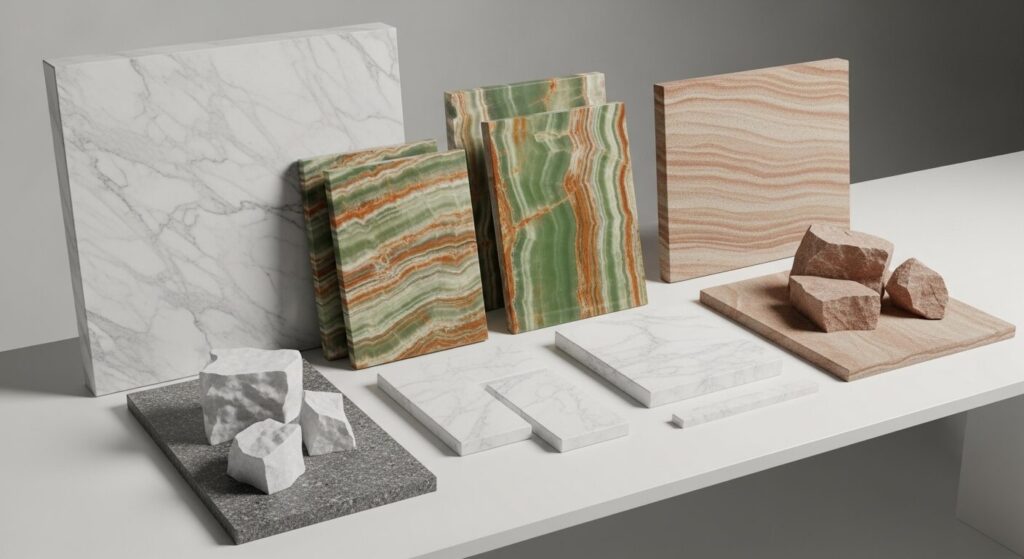
For marble, granite, and onyx, requesting polished tile samples in standard sizes — typically 30×30 cm or 20×20 cm — allows you to assess surface finish, color consistency, and vein patterns. Most established exporters can dispatch these within five to ten business days of order confirmation.
Slab Cuttings
If you are sourcing for high-end architectural or interior design projects in Italy or Germany, small slab cuttings of 30×60 cm or custom dimensions give a more accurate representation of the material’s full character. This is especially important for bookmatched marble from the Ziarat formation.
Rough Stone and Tumbled Pieces
Buyers in the gemstone trade or landscaping sector often request rough or tumbled samples. These are common for pebbles, cobblestones, and raw gem crystals. Exporters from KPK and Gilgit-Baltistan regularly accommodate such requests for buyers evaluating quality before placing wholesale gem lots.
Certified Gemstone Samples
For precious and semi-precious stones, always request that samples come with a gemological certificate or at minimum a detailed grading report from the exporter. Reputable Pakistani gem exporters based in Peshawar and Lahore can provide documentation aligned with international grading standards.
How to Formally Request Samples from Pakistani Exporters
The process of requesting samples from Pakistani stone exporters follows a fairly standardized B2B protocol, though nuances exist depending on the exporter’s scale and experience with international clients.
Step 1 — Identify and Shortlist Exporters
Use a trusted B2B directory that has pre-vetted Pakistani stone and gemstone suppliers. Confirm that the exporter has a documented export history, valid National Tax Number (NTN), and prior experience serving buyers in your target market.
Step 2 — Send a Formal Sample Request with Specifications
Provide the exporter with a clear written request specifying stone type, color preference, finish (polished, honed, brushed), sample dimensions, and quantity. Mention your end-use context — whether for residential flooring, commercial cladding, jewelry production, or export resale. Vague requests lead to mismatched samples and wasted time.
Step 3 — Clarify Sample Costs and Shipping Arrangements
Pricing for stone samples from Pakistan varies. Tile samples typically cost between USD 20 and USD 80 per piece plus shipping, while slab cuttings may range from USD 50 to USD 200 depending on thickness and material. Many exporters offer free samples for buyers who commit to covering international courier costs via DHL, FedEx, or TNT. For gemstone samples, costs depend heavily on stone category and carat weight.
Step 4 — Confirm Packaging and Documentation
Ensure the exporter provides a commercial invoice, packing list, and country of origin certificate with the shipment. Buyers in China, the UAE, and the EU often require these documents for customs clearance. Failing to confirm this upfront causes costly delays at your port of entry.
Step 5 — Evaluate and Provide Feedback
Upon receipt, conduct a systematic evaluation against your specifications. Document discrepancies in color, dimension, or finish and communicate them clearly to the exporter. Professional Pakistani exporters welcome detailed feedback and use it to calibrate bulk production accordingly.
Common Challenges and How to Overcome Them
International buyers occasionally encounter slow response times from smaller quarry-based exporters who lack dedicated export departments. To mitigate this, prioritize suppliers with established export infrastructure and multilingual communication capabilities. For buyers in China and Germany particularly, time zone differences can slow the sample approval cycle — establish a clear communication schedule early in the process.
Another common issue is color variation between samples and actual bulk consignments. Address this by requesting samples from the exact quarry batch or block number that will be used for your order. Ask the exporter to photograph the specific slab or batch alongside your sample piece before shipping the bulk consignment.
Building a Long-Term Sourcing Relationship with Pakistani Suppliers
The sample request process is also the foundation of a longer commercial relationship. Pakistani stone exporters highly value buyers who communicate professionally, pay sample costs promptly, and provide constructive feedback. Buyers from the UAE and Italy who invest time in understanding Pakistani supply chains consistently report better pricing, priority production scheduling, and greater flexibility on custom orders over time.
Starting with a sample order also allows you to evaluate the exporter’s communication quality, packaging standards, and documentation accuracy — all indicators of how they will perform on large-volume contracts.
Start Sourcing Pakistani Stone the Right Way
Getting stone samples from Pakistani exporters is a structured, manageable process when you know the right steps. From identifying quarry regions to confirming documentation requirements, each stage of the process protects your sourcing decisions and builds the supplier relationships that drive long-term business value.
Browse Pakistani marble, granite, onyx, salt stone, and gemstone exporters on PakiStone.com. Connect directly with suppliers across Balochistan, KPK, Punjab, and Gilgit-Baltistan who are ready to dispatch samples and discuss bulk supply agreements with international buyers today.