How to Import Marble from Pakistan: Complete Buyer Guide
Importing marble from Pakistan offers international buyers access to some of the world’s finest natural stone at highly competitive prices. Pakistan exports marble to over 50 countries, with major buyers in China, UAE, Italy, Germany, and the United States. This guide covers everything a first-time or experienced buyer needs to know about sourcing, ordering, and importing Pakistani marble successfully.
Step 1: Identify Your Stone Type and Specification
Pakistan produces dozens of marble varieties across multiple provinces. Before contacting suppliers, define your requirements clearly: stone type (white marble, onyx, travertine, limestone), finish (polished, honed, brushed), format (blocks, slabs, tiles, cut-to-size), thickness, and quantity. Having clear specifications allows Pakistani exporters to quote accurately and prevents misunderstandings during production.
Step 2: Find and Verify Pakistani Marble Exporters
Use PakiStone.com to find exporters with established track records. Look for exporters with proven export experience and clear documentation. Request company registration documents, export license copies, and references from previous international buyers before proceeding. Avoid sourcing through unverified social media contacts or unsolicited email offers.
Step 3: Request Samples and Approve Material
Always request physical samples before placing a production order. Reputable Pakistani marble exporters provide cut samples (typically 30x30cm or 20x20cm) at material cost plus international courier charges. Examine samples for color consistency, veining pattern, surface finish quality, and structural integrity. For large orders, request a slab inspection at the factory before container loading — this can be done in person or via a third-party inspection agent in Karachi or Lahore.
Step 4: Understand Pricing and Payment Terms
Pakistani marble is priced FOB (Free On Board) Karachi or CIF (Cost Insurance Freight) to destination port. FOB pricing puts shipping arrangement responsibility on the buyer while CIF includes freight to your port. Standard payment terms for new buyer relationships are 30% advance deposit with 70% against Bill of Lading. Established buyers may negotiate Letter of Credit (LC) or open account terms after a track record is established.
Step 5: Export Documentation from Pakistan
Standard export documents for Pakistani marble shipments include Commercial Invoice, Packing List, Bill of Lading, Certificate of Origin (issued by FPCCI or Chamber of Commerce), and Phytosanitary Certificate where required. Some destination countries require additional documentation — your freight forwarder should advise on country-specific requirements. HS Code for marble tiles is 6802.91 and for marble blocks is 2515.11.
Step 6: Shipping and Lead Times
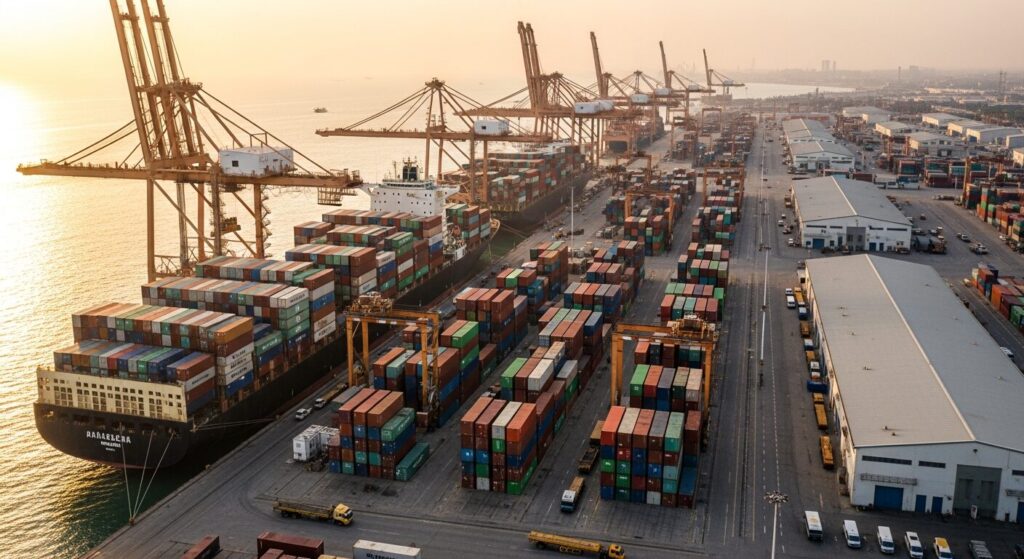
Pakistani marble ships primarily from Karachi port via container. Standard 20-foot containers carry approximately 18-22 marble slabs or 15-18 metric tons of tiles. Sea freight transit times are approximately 12-15 days to UAE ports, 18-22 days to European ports, and 25-30 days to US East Coast ports. Production lead time before shipping is typically 3-5 weeks for standard items and 6-8 weeks for custom fabrication.
Step 7: Import Duties and Regulations
Import duty rates for natural stone vary by destination country. Most major markets apply 0-5% duty on natural marble under standard trade terms. China applies 0% duty on Pakistani marble under the Pakistan-China Free Trade Agreement (PCFTA). UAE applies 5% import duty. EU applies 0-1.7% depending on product category. Consult your customs broker for current rates applicable to your specific product and destination.
Common Mistakes to Avoid
First-time buyers commonly make several avoidable mistakes when importing Pakistani marble. Ordering without physical sample approval leads to color and quality disputes. Skipping pre-shipment inspection results in damaged or off-specification material arriving at destination. Not specifying packaging requirements (foam interleaving, wooden crating) causes transit damage. Working with unverified suppliers without export documentation exposes buyers to fraud risk. Using PakiStone.com connects you directly with reliable exporters.
Frequently Asked Questions
What is the minimum order quantity for importing Pakistani marble? Most exporters require one full container (FCL) as minimum, approximately 15-20 metric tons of tiles or 18-22 slabs. Some exporters consolidate smaller orders (LCL) for buyers testing new products.
How do I know if a Pakistani marble exporter is reliable? Request business registration documents, previous buyer references, and export documentation samples. Exporters on PakiStone.com are selected based on documentation for documentation and trade history.
Can I visit Pakistani marble factories before ordering? Yes. Karachi and Lahore host numerous marble processing facilities that welcome buyer visits. Many exporters arrange factory tours including quarry visits to Balochistan for serious buyers.